
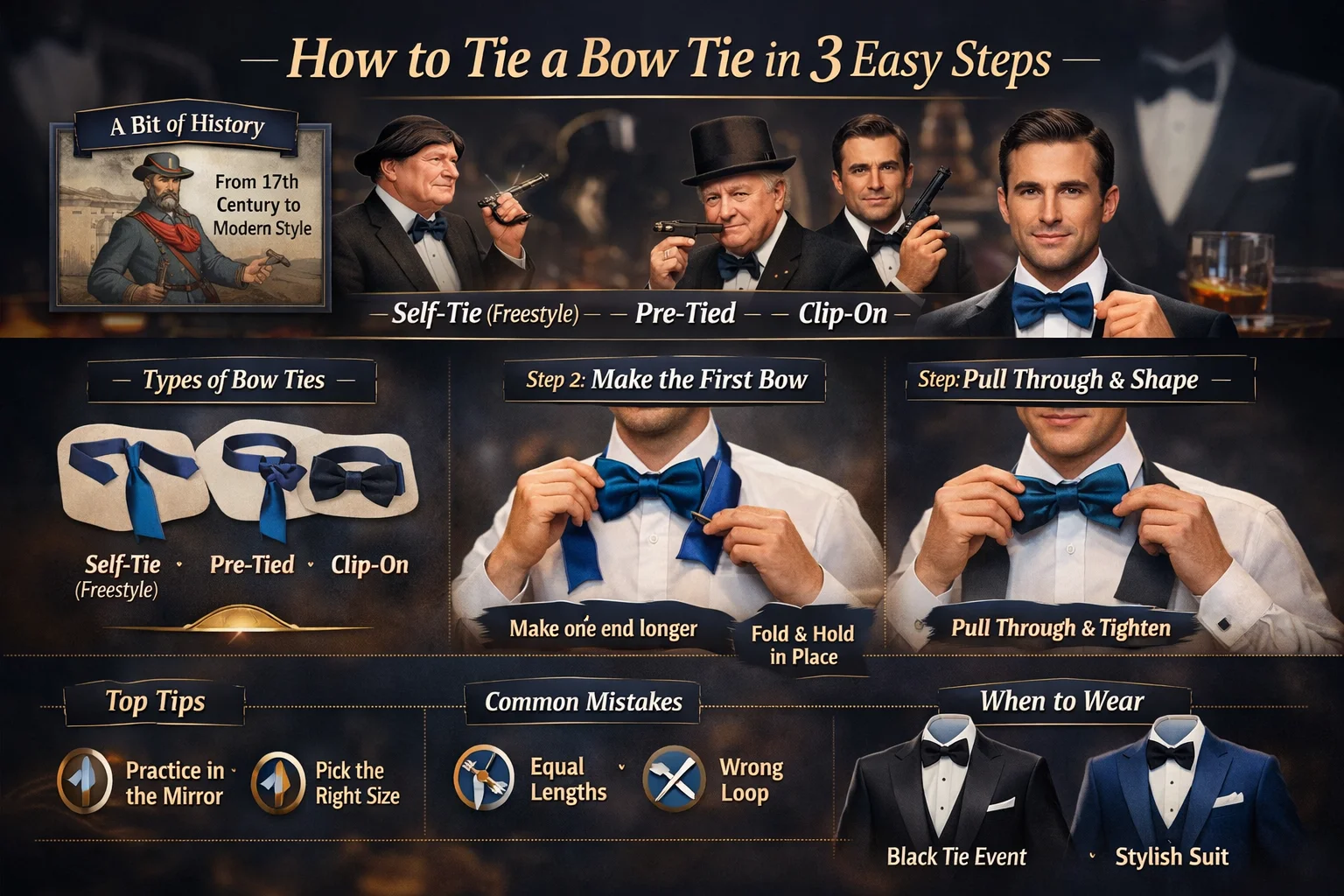
The bow tie is a classic accessory that adds instant elegance and personality to any outfit. Whether you’re getting ready for a wedding, a black-tie event, a formal dinner, or just want to stand out with a touch of style, knowing how to tie a bow tie yourself makes a big difference. Many people think it’s hard or complicated, but the truth is, it’s much easier than it looks. In fact, if you can tie your shoelaces, you can learn to tie a bow tie. This guide will show you the easiest way in just three simple steps, explained clearly so anyone can follow along.
In this article, we will cover everything you need to know. We start with a bit of background on the bow tie, explain the different types available, go through the step-by-step instructions for the easiest method, share tips for perfect results, talk about common mistakes to avoid, and even discuss when and how to wear one. By the end, you’ll feel confident to tie your own bow tie every time.
A Short History of the Bow Tie
The bow tie has a long and interesting story that goes back hundreds of years. It started in the 17th century during the Thirty Years’ War in Europe. Croatian soldiers wore scarves around their necks to keep their shirts closed. These scarves caught the eye of French people, who called them “cravats” (from the French word for Croat). The style became popular among the upper class in France.
Over time, the cravat changed into different forms. By the 18th and 19th centuries, the bow tie as we know it today began to appear. It was seen as a neat and formal option compared to longer neckties. In the 19th century, bow ties became common for formal wear, especially among artists, writers, professors, and gentlemen at fancy events.
Famous people helped make the bow tie even more popular. Think of characters like James Bond in some movies, or real-life figures such as Winston Churchill, who often wore one. In the 20th century, bow ties had ups and downs in fashion, but they never went away completely. Today, they are back in style, worn by everyone from grooms at weddings to people who just like a classic look.
The bow tie stands for sophistication, confidence, and a little bit of fun. Unlike a regular necktie, which can feel serious, a bow tie often shows personality and a sense of tradition.
Types of Bow Ties: Which One Should You Choose?

Before you learn to tie one, it’s good to know the main types of bow ties. This helps you pick the right one for your needs.
First, there are self-tie bow ties (also called freestyle or untied bow ties). These are the real deal. They come as a flat piece of fabric with two ends, and you tie them yourself. Self-tie bow ties look the most natural and elegant because the knot is never perfect — it has a slight imperfection that makes it look handmade and stylish. They come in one-piece or two-piece designs, often adjustable with a hook or slide at the back for different neck sizes.
Then there are pre-tied bow ties. These already have the bow shape made and sewn in place. They usually have a band that goes around your neck with a clip, hook, or adjustable strap. Pre-tied ones are very easy — you just put them on like a collar. They are great for beginners, kids, or when you’re in a hurry. However, many people in fashion say pre-tied bows look too perfect and stiff, missing the charm of a hand-tied one.
There are also clip-on bow ties, which clip directly onto your shirt collar. These are the easiest but often look the least natural.
For the best look and the most satisfaction, go for a self-tie bow tie. Once you learn the steps, it’s quick, and you’ll get that proud feeling of doing it yourself.
The Easiest Way to Tie a Bow Tie in 3 Simple Steps

Now comes the main part: how to tie a bow tie. This method is the simplest and most reliable one that works for almost everyone. It breaks down the process into just three easy steps. Practice in front of a mirror a few times, and you’ll get it in minutes.
Step 1: Put the bow tie around your neck and adjust the length
Start by draping the bow tie around your neck, under your collar (like you’re putting on a regular tie). Make sure the fabric is facing outward — the pretty side should show.
One end needs to be longer than the other. Adjust so the longer end hangs down about 2 to 4 inches lower than the shorter end. A good rule is to have the longer end reach roughly to your chest or just below your chin when hanging straight. The exact length can vary depending on your neck size and the bow tie style, but starting with one side noticeably longer makes the rest easier.
Hold both ends in your hands. This is your starting position. Take your time here because getting the length right helps everything else fall into place.
Step 2: Make the basic knot and form the first bow shape
Cross the longer end over the shorter end, just like the first part of tying shoelaces. Then, bring the longer end up and through the loop around your neck (the space between the tie and your throat). Pull it down snugly so it tightens a bit against your collar. This creates a simple knot at the base.
Now, take the shorter end and fold it in half to form the shape of half a bow. Hold this folded part horizontally across your neck — this will be one “wing” of the bow. The fold should point outward, and the loose end should hang down a little.
Keep holding this half-bow in place with one hand (usually your non-dominant hand). With your other hand, take the longer end and let it drop straight down in front of the half-bow you just made.
Step 3: Complete the bow and pull it through
Fold the longer end in half too, creating the second half of the bow. Now you have two folded parts facing each other.
Here’s the key part: Push the folded longer end through the small loop (or hole) that formed behind the first half-bow when you tightened the knot earlier. This loop is right in the middle, at the base of the bow.
Pull the folded end through gently but firmly. As you pull, the bow will start to take shape. Tug on both sides of the bow (the wings) to tighten it. Adjust by pulling the ends slightly or pushing the knot up toward your neck for comfort.
Once it’s through, use your fingers to shape the bow. Fluff the wings so they look even and symmetrical. Pull the fabric a bit to make the bow fuller if needed. Tighten or loosen until it sits nicely against your collar without being too tight or too loose.
And that’s it! Three steps: position and cross, form the first half and knot, then pull the second half through. Look in the mirror, smile, and admire your work.
Tips for a Perfect Bow Tie Every Time
Practice makes it easier. The first few times might take 5-10 minutes, but soon you’ll do it in under a minute.
Always tie it while standing in front of a mirror. It’s hard to see what you’re doing without one.
Choose the right size bow tie. Most self-tie ones adjust for neck sizes from 14 to 18 inches or more. Make sure the fabric isn’t too stiff — silk or cotton blends work best for beginners.
For a more casual look, make the bow a bit smaller and looser. For formal events, aim for a neat, even bow.
If the bow looks lopsided, it’s usually because the starting lengths weren’t quite right or you didn’t pull evenly. Just untie and try again — bow ties are forgiving.
Common Mistakes and How to Avoid Them
Many people make the same small errors when learning.
One big mistake is starting with both ends the same length. Always make one longer — otherwise, you won’t have enough fabric to form the second bow.
Another is pulling too hard too soon. Tighten gently at each step so you don’t twist the fabric.
Some people forget to fold the ends properly into half-bows. Make sure each side is folded neatly with the ends pointing down.
Pulling the wrong part through the loop is common too. Remember: it’s the folded longer end that goes through the hole behind the first bow.
If the bow sits too low or too high, adjust the neck loop before finishing. And don’t worry if it’s not perfect the first time — a slightly imperfect bow looks more authentic than a pre-tied one.
When and How to Wear a Bow Tie
Bow ties shine at formal occasions. Wear one with a tuxedo for black-tie events, weddings, or galas. Pair it with a dress shirt that has a wing or spread collar.
For less formal looks, try a bow tie with a suit and regular shirt. Patterns like polka dots, stripes, or fun prints add personality to everyday outfits.
Choose colors wisely. Black or navy for classic formal wear, bright colors or patterns for parties.
A bow tie works best when the rest of your outfit is simple. Let the bow be the star.
Final Thoughts
Tying a bow tie doesn’t have to be scary or complicated. With the three simple steps — position and adjust, form the first half and knot, pull through and shape — you can master it quickly. It’s a skill that makes you feel more confident and polished.
Next time you have a special event, skip the pre-tied version and tie your own. You’ll get compliments, and you’ll know you did it yourself. Practice a few times, be patient, and soon it will feel natural.
Now go ahead, grab your bow tie, stand in front of the mirror, and give it a try. You’ve got this!
Disclaimer: This article is for general information only. While we aim to provide accurate instructions, we are not responsible for any mistakes or issues that may arise from following them. Practice tying your bow tie before important events. Always check the manufacturer’s guidelines for specific products.
About the Author


John Giddings is an expert in app reviews and guides, helping parents and families understand and use digital tools easily. He writes clear, step-by-step articles on apps like ParentPay, showing how to make payments, stay organized, and get the most out of technology. John’s goal is to make complicated apps simple and safe for everyone to use.