
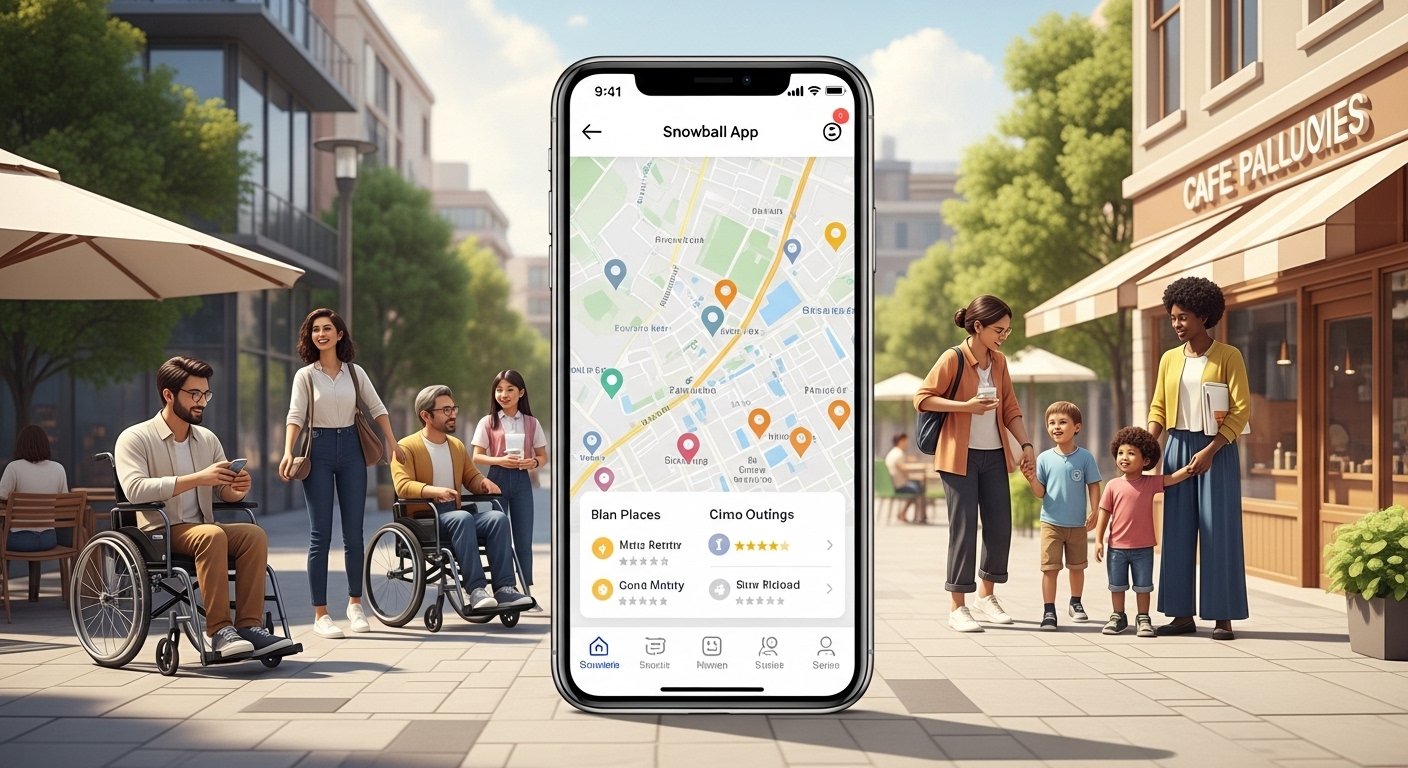
Have you ever planned a day out and worried if a place would actually work for you? Many people face this every time they want to visit a restaurant, shop, or park. In 2026, the snowball app makes things much simpler. It helps you find spots that fit your needs before you even leave home.
This free app lets regular folks like you and me check accessibility details for places around the world. You read honest reviews from other users. Then you add your own thoughts to help everyone else. Also, it covers both physical access and things that matter for neurodivergent comfort. That’s why so many people now rely on it for everyday outings.
I remember my friend Sarah telling me about her first try. She needed step-free entry and a quiet corner because loud noises bother her. She opened the app, searched her local café, and saw clear details right away. After that, she felt confident to go. Simple stories like this show how the snowball app changes small plans into stress-free fun.
What Is the Snowball App Exactly?
The snowball app works like a friendly guide for accessible places. Think of it as a community map where everyone shares what really matters. You search for restaurants, cafés, shops, tourist spots, or even public transport stops.
Next, you see ratings and notes about ramps, parking, toilets, lighting, sensory spaces, and more. In addition, the app keeps growing because users add new locations all the time. Over time, this creates a huge, helpful database that gets better every day.
Another thing is its focus on real experiences. Someone might mention if a door is heavy or if there is a changing places facility. This means you get practical tips that official websites often miss. For beginners, this feels welcoming because you do not need any special skills to use it.
In 2026, the app has improved its search speed and added better filters. That helps busy families or students plan school trips quickly. Small businesses also check how their own venue appears so they can make small changes that welcome more guests.
Why the Snowball App Matters in 2026
Life moves fast these days. Yet many places still surprise us with hidden barriers. The snowball app fixes that by putting real user stories first.
For example, a teacher planning a class visit can search ahead and pick a museum with good access. This saves time and keeps everyone happy. Students use it too when they explore new cities for projects. They learn about inclusion while having fun.
Small business owners benefit as well. After they read reviews, they see what customers notice most. Over time, they fix simple things like better signage. This creates a kinder world for all.
Also, 2026 updates brought smoother maps and easier photo uploads in reviews. That means clearer pictures of entrances or seating areas. Beginners love this because visuals help them understand faster than words alone.
How to Download the Snowball App on Your Phone
Getting started takes just a few minutes. First, grab your phone and open the app store that matches your device.
On an Apple phone, go to the App Store. Search for “Snowball Community”. Tap the official one and hit download. It is free, so no worries about cost.
For Android users, open Google Play. Type “snowball community” in the search bar. Choose the right app and install it. After that, allow any basic permissions for location if you want nearby suggestions.
Once it finishes, open the app. You will see a simple welcome screen. Sign up with your email or continue as a guest at first. This step feels easy even if you are not tech-savvy.
Many beginners start as guests to look around. Later they create an account to add reviews. That way they test the waters without pressure.
Step-by-Step Guide to Setting Up Your Account
After download, the setup feels like chatting with a helpful friend. The app asks a few quick questions. You can skip most if you want.
First, think about what matters to you. Do you need wheelchair access, hearing support, or calm spaces? You can note these preferences. This means future searches show spots that match you best.
Next, add a profile picture if you like. Many users pick a simple photo so others feel connected. After that, explore the home screen. It shows popular spots near you or trending reviews.
Another helpful tip is to turn on notifications gently. You can choose only important ones, like when someone replies to your review. Over time, this keeps you in the loop without overwhelming your phone.
For students or teachers, create a separate note in the app for school-related searches. This keeps everything organized from the start.
How to Search for Places Using the Snowball App
Searching is the fun part. Open the app and tap the search bar at the top. Type the name of a place or just a city. For example, “coffee shop near me with ramp”.
The snowball app shows results with clear icons. Green marks mean good access according to users. Yellow or red flags highlight possible issues.
You can filter by needs. Tap buttons for step-free entry, accessible toilets, or quiet areas. This narrows things down fast. In addition, the map view lets you see everything on one screen like a real map.
After you pick a spot, scroll to read full reviews. People share honest details like “the toilet is spacious but the door needs two hands”. Real examples like this help you picture the visit.
Beginners sometimes forget to check recent reviews. Always look at dates because places can improve or change over time.
Adding Your First Review – A Simple Walkthrough
Leaving your own review helps the whole community. It feels good to pay it forward. Here is how to do it easily.
Visit a place you know. Take a few mental notes or quick photos if allowed. Then open the snowball app.
Search for that exact spot. If it already exists, tap it and find the “add review” button. Rate different parts like parking, entrance, inside space, and staff helpfulness.
Write a short note in your own words. For example, “The ramp was gentle and wide enough for my scooter. Lighting felt soft and comfortable.” Keep it kind and factual.
Upload one or two clear photos. This shows others exactly what you saw. After that, submit. Your review goes live quickly and makes the map richer.
If the place is missing, the app lets you add it in minutes. Just enter the name and address. Then fill basic details. This is great for small businesses or new cafés that no one has reviewed yet.
Common beginner mistake? Writing too much at once. Start short. Over time your reviews get better naturally.
Tips for Better Reviews That Actually Help Others

Good reviews follow a simple pattern. First, describe the access feature clearly. Next, mention how it felt in real life. Finally, suggest one small improvement if needed.
For neurodivergent needs, note things like background music volume or busy times. A student once shared that a library corner with bean bags worked perfectly for focus. That tip helped many others.
Another thing is to add photos of signs or menus if they have large print. Small details matter a lot.
In 2026, the app improved photo quality checks. This means your pictures look sharper and more useful. That’s why new users see better results faster.
Teachers can encourage students to add school trip reviews as group projects. It teaches kindness and observation skills at the same time.
Unique Ways to Use the Snowball App Every Day
Families use it for weekend outings. They search parks with accessible paths and toilets. This turns planning into family fun instead of stress.
Small businesses check their own listing regularly. They read feedback and make friendly updates. Over time, more customers visit because they feel welcome.
Travelers love it for new cities. Before booking a hotel, they read snowball app notes about nearby eateries. This saves surprises on arrival.
Students working on social studies projects use real reviews as examples of community action. They learn how one app brings people together.
Another fresh idea in 2026 is combining it with public transport apps. Some users plan full journeys knowing each stop has good access.
Common Beginner Mistakes and How to Avoid Them
Many new users search too broadly at first. Instead, add your specific needs right away. This gives better matches.
Another mistake is forgetting to update your review if something changes. Places improve, so a quick edit helps everyone.
Some worry about writing perfectly. Remember, honest and simple words work best. No one expects fancy language.
Also, always respect privacy. Do not share photos of people without permission. The app guidelines remind you of this gently.
Over time, you learn what details matter most to you. That makes using the snowball app feel natural and quick.
How the Snowball App Helps Different People
For parents with young kids who need extra space, it highlights family-friendly accessible spots. Teachers plan inclusive class visits without last-minute calls.
Small business owners in Karachi or other cities discover what local customers value. They make small, low-cost changes that bring more visitors.
Neurodivergent adults find quiet cafés for meetings or alone time. This brings calm into busy days.
In addition, older adults appreciate clear notes about seating and lighting. Everyone wins when information flows freely.
Future Improvements People Hope to See
Users already notice faster loading and better global coverage in 2026. More cities show detailed listings now.
Many hope for voice search for hands-free use. Others want easier ways to connect with business owners directly through the app.
Whatever comes next, the heart stays the same: real people helping real people.
FAQ About the Snowball App
Is the snowball app really free to use?
Yes, downloading and using basic features costs nothing. You can read and add reviews without paying.
Can I use the snowball app without creating an account?
You can browse as a guest. Creating an account lets you add reviews and save preferences.
Does it work well for travel outside my city?
It does. The snowball app covers many countries now. Users add places worldwide, so international trips feel easier.
How private is my information?
The app focuses on place reviews, not personal stories. Follow their guidelines and you stay safe.
What if a place has no reviews yet?
You can add the location yourself. Your review becomes the first helpful note for others.
Can businesses respond to reviews?
Some features allow businesses to view feedback. This encourages positive changes.
Is the snowball app good for beginners?
Absolutely. The design stays simple with clear buttons and short guides inside.
Wrapping Up Your Snowball App Journey
The snowball app turns worry into confidence for everyday adventures. You download it quickly, search easily, and join a kind community. After that, each review you add makes the world a little more open for everyone.
Start small. Check one familiar place today. Read a few reviews and maybe leave your own. Over time, you will discover new favorite spots and help others do the same.
Life feels better when we share what works. The snowball app gives you that simple power in your pocket. Give it a try and see how it fits your routine.
Disclaimer:
This article is for informational and educational purposes only. The information reflects general 2026 trends and user experiences with accessibility apps like the snowball app. Technology and app features change quickly, so always verify the latest details directly from official app stores or the developer’s website. This article does not endorse or promote any specific tool, service, or website. Readers should respect all copyright laws and terms of service when using any app. Consult professionals for personal accessibility needs.
Explore More
- Musicology App Explained: Download, Setup & Best Features Guide
- Just Eat Mobile App Explained: How to Download, Use & Get Food Fast
- Freely TV App: Download for Android, Smart TV & Firestick
About the Author


John Giddings is an expert in app reviews and guides, helping parents and families understand and use digital tools easily. He writes clear, step-by-step articles on apps like ParentPay, showing how to make payments, stay organized, and get the most out of technology. John’s goal is to make complicated apps simple and safe for everyone to use.